Start-Line Acceleration: Using Speed-Build Data to Nail Your Timing
kTool
·
·
3 min read
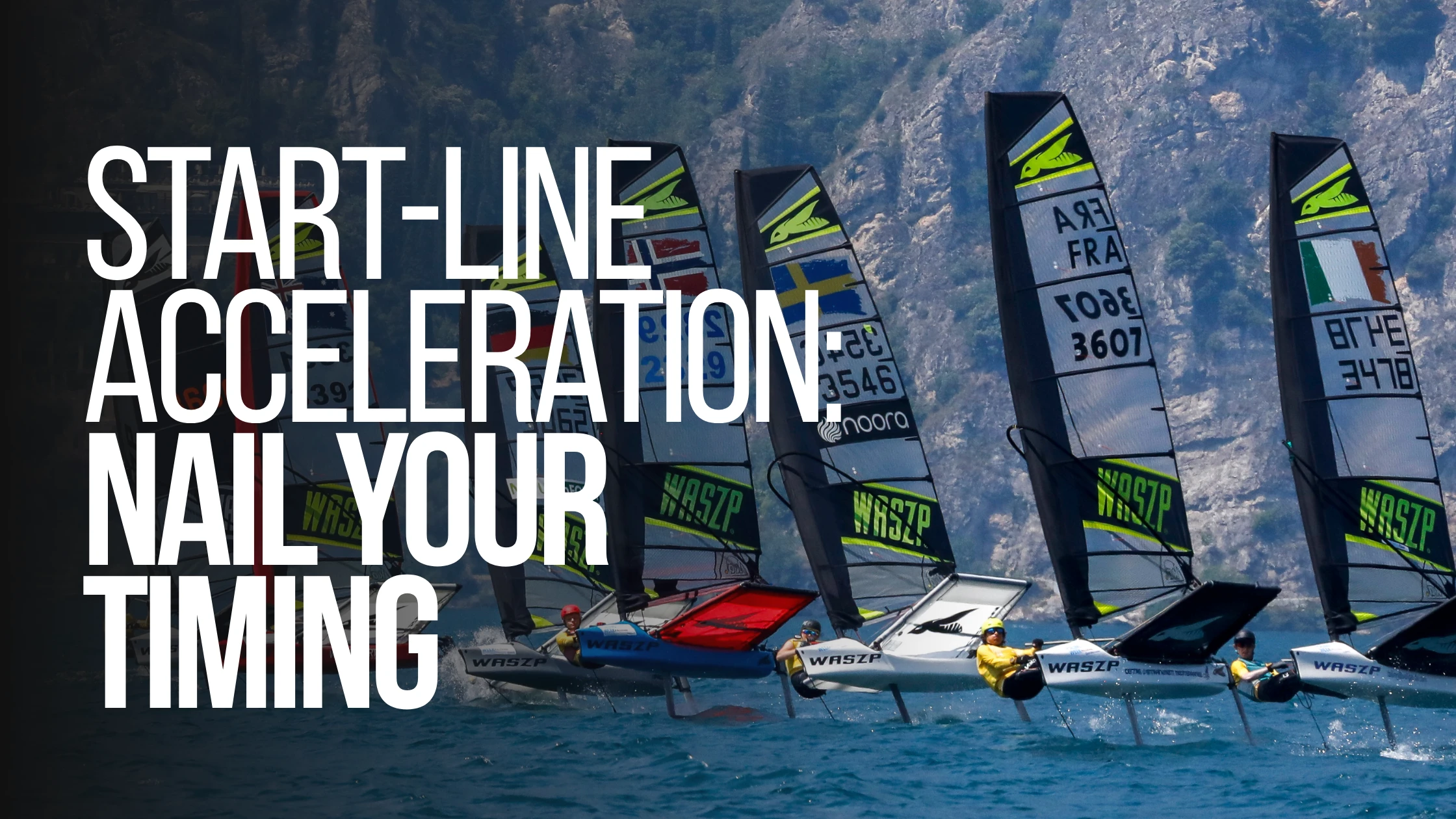
A great start isn't about being first to the line. It's about hitting the line at full speed, right as the gun goes. Too early and you're accelerating from a standstill while everyone around you is already flying. Too late and you've burned time you'll never get back. The difference between a good start and a great one usually comes down to a few seconds — and those seconds live in your speed-build data.
Why Timing Beats Positioning
Most sailors think about starts in terms of space: finding a gap, holding a lane, not getting squeezed out. That matters, but it's only half the equation. The other half is acceleration — how quickly you go from parked or slow-moving to full speed once you commit to your final approach.
Two boats can be in the same spot on the line with the same time left on the clock, and still have completely different outcomes, because one accelerates faster than the other. That's a boat-handling and timing skill, and it's measurable.
What Speed-Build Data Actually Shows
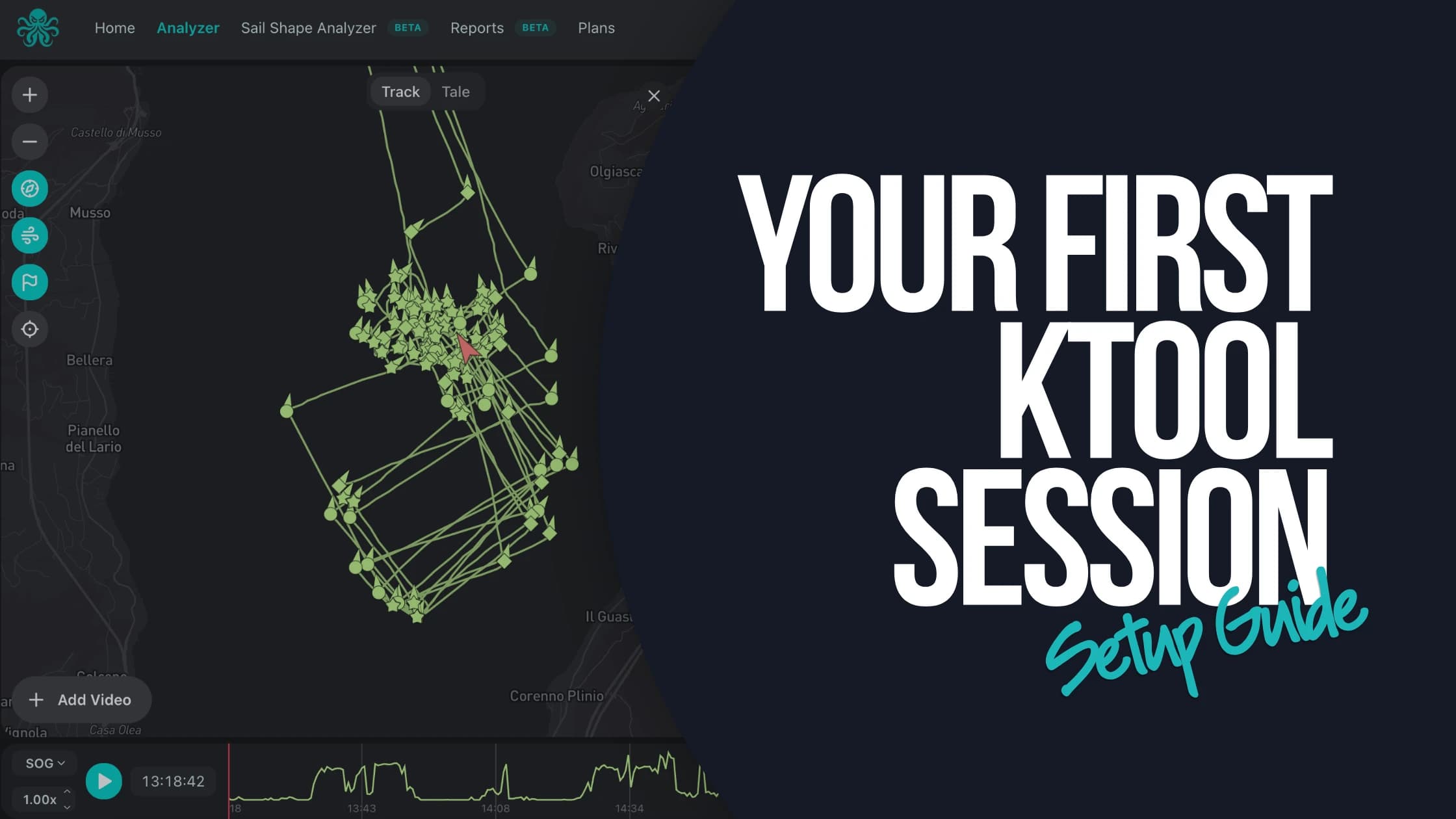
kTool logs your speed continuously through the pre-start sequence, which means you can look back at exactly how your boat accelerated in the final 30–60 seconds before the gun. A few things to look at:
- Time to target speed — how many seconds it took you to go from your holding speed to full upwind target speed.
- Speed at the gun — where you actually were, speed-wise, the moment the start went off.
- Acceleration curve shape — a steady, controlled ramp-up looks very different from a late, panicked burst of speed, even if the end speed is similar.
Comparing these across multiple starts in the same session — or across sessions — turns "that start felt good" into something you can actually verify and repeat.
Building Your Own Timing Benchmark
The goal isn't to accelerate as fast as physically possible every time. It's to know, consistently, how much time your boat needs to go from stopped or slow to full speed in the conditions you're sailing in. That number changes with wind strength, sea state, and boat type — which is exactly why relying on feel alone is unreliable.
- Log several practice starts in a session, noting your final approach for each.
- Pull the speed-build time for each one from your data — how long from committing to full speed.
- Find your personal average acceleration time in those conditions.
- Use that number to set your final approach in racing — if you know you need 12 seconds to build to full speed, that tells you exactly when to commit.
- Re-check after condition changes. Acceleration time in 8 knots is not the same as in 18 knots; keep a rough benchmark for each range.
Turning Feel Into a Repeatable System
The best starters aren't guessing — they've internalized their boat's acceleration profile so well that the timing becomes automatic. Speed-build data is how you get there faster: instead of years of trial and error, you can see directly which approaches produced the fastest, most controlled acceleration, and repeat exactly what worked.
Next time you're reviewing a session, don't just look at your start position. Pull up the speed trace in the last minute before the gun — that's where the real start happens.
Good sailors train hard.The best ones train smart.
Start free — no cardRelated posts