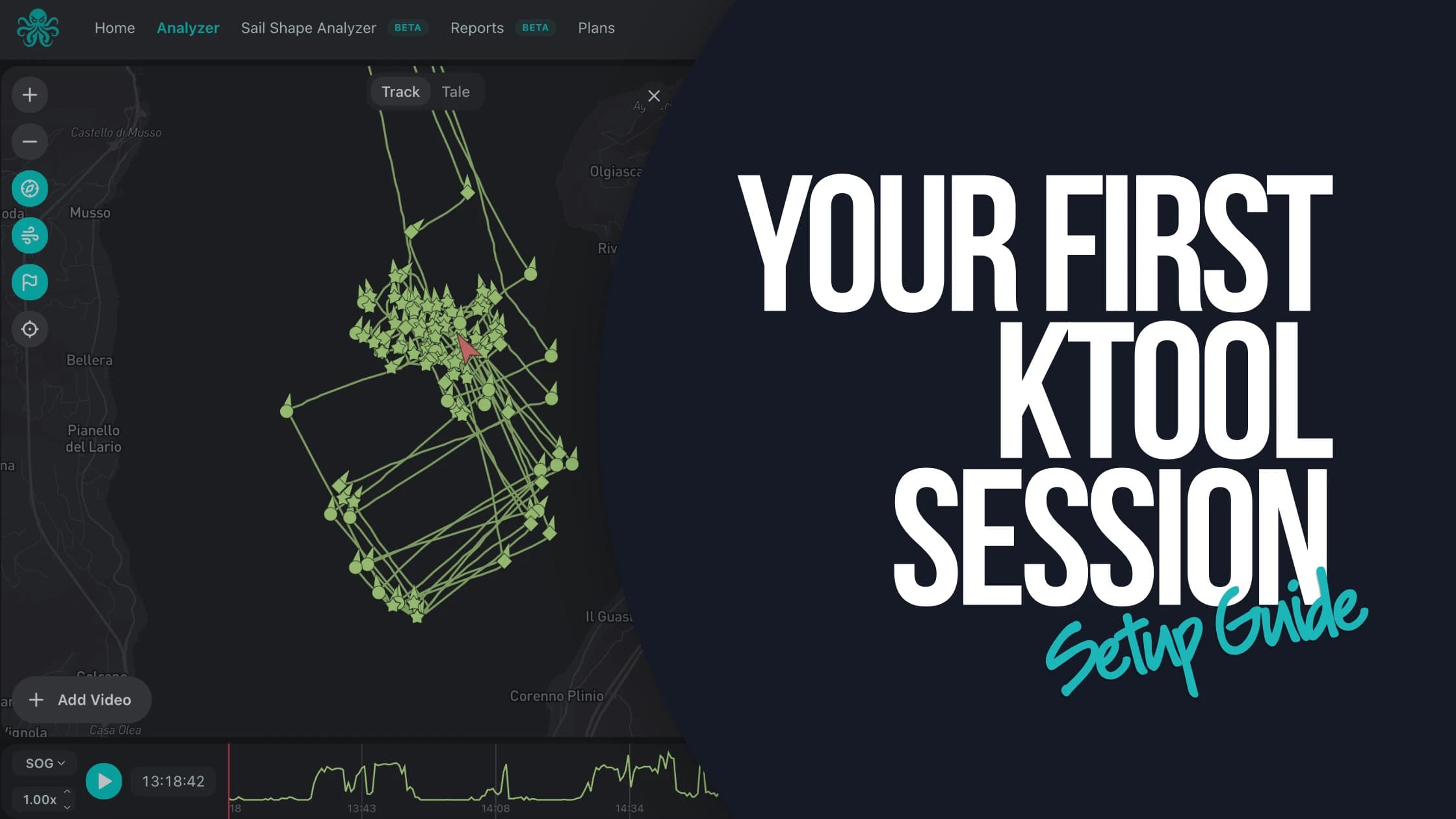
How Vadim learnt to tack less from his data
kTool
·
·
3 min read
While sailing, there are so many calculations going on in your head that it's hard to tell where your decisions come from. Which ones are impulse, and which ones come from what you've learnt. That's where data comes in.
First Off the Line, Mid-Fleet by the First Lap
This season, kTool co-founder Vadim found out he was tacking more than he should. The clue: he was first off the line in almost every race. Good starts, clean lanes. But by the middle of the first lap, he was mid-fleet. This made him study how was he sailing.
On the water, he couldn't explain it. He felt fast in some races and not in others. So after training, he uploaded the sessions to kTool and looked at what was different between them.
The First Minute
The first thing the data showed him was the start itself. Timing was okay, speed was good. But he wasn't focused on just being fast. He wanted to go somewhere, play some tactics. In the minute when you have to get in front, he was losing metres. Behind means dirty wind, and after that it's too late. The advantage was gone.
His conclusion: nail the first minute. Even from the wrong position, commit to it.
Ten Tacks on One Beat
Then the upwinds. In his first trainings he was making 10 tacks on one beat. He'd feel headed and tack. Then he'd be headed again.
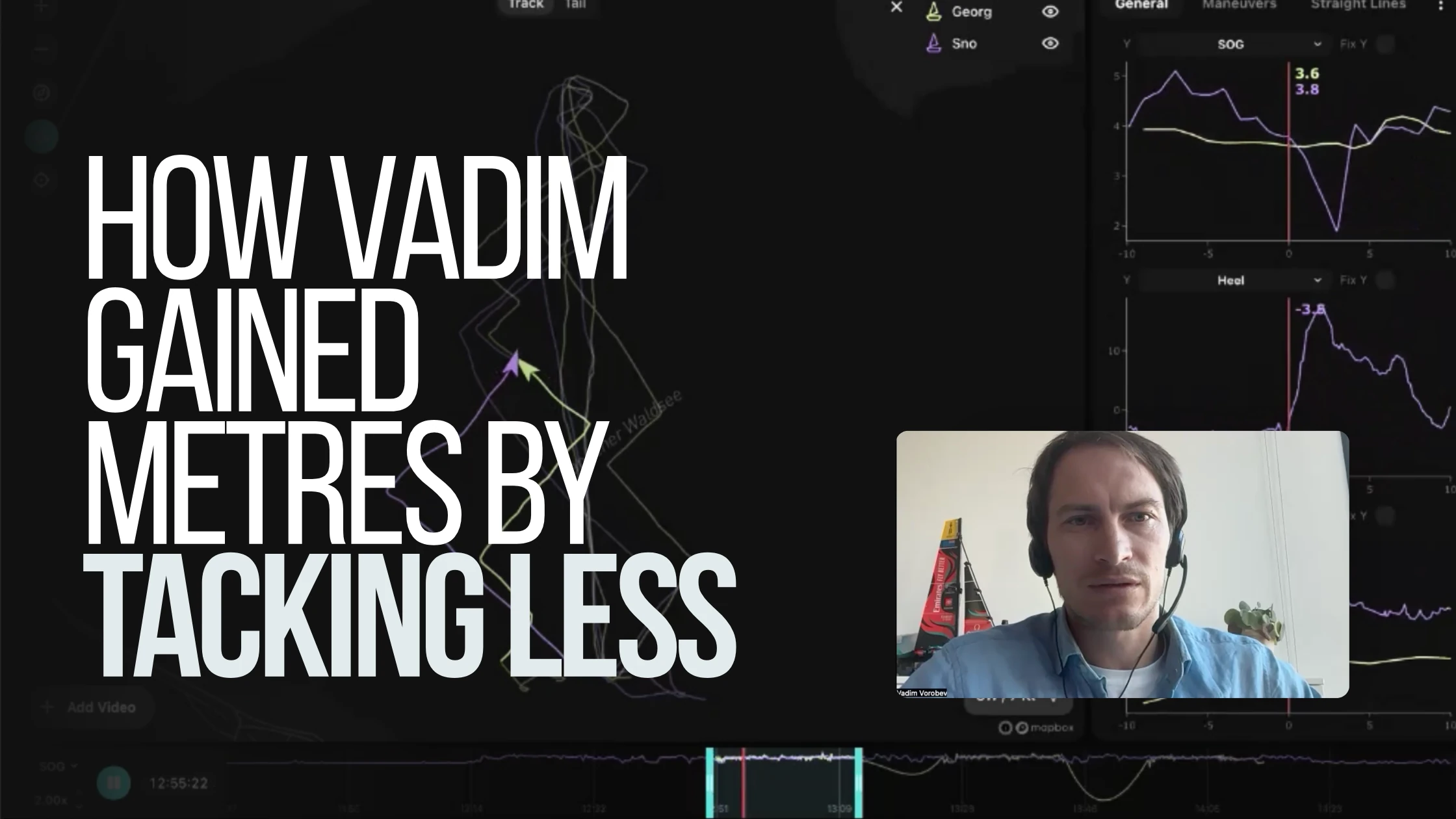
The track explained part of it. Small lake, short course, a lot of shifts. In a steady wind, the track shows clean 90-degree turns. His bent everywhere. Inside the race the course didn't feel that short. Afterwards you see how small it actually is, and how many metres every tack costs.
The speed explained the rest. Fast into the tack, down to 2 knots coming out, then ten seconds just to recover. At least 60 metres every tack. And the shift he'd tacked on was often already swinging back, faster than anyone could adjust to. On a course that short, one double tack and you've lost.
Some of those tacks weren't about the wind at all. Coming out of a tack, he'd see the whole fleet crossing him and think he had to tack now. Looking at the trajectory afterwards, he only needed to keep going. Another half a minute and he'd have laid the mark, in front.
Same Day on Lake Garda, Different Tacks
At a training on Lake Garda in April, he found something else. Compared with the others on the same day, his tacks were different. He went in higher than everybody else and came out lower. The others had a much sharper transition. He took about five seconds to bring the boat flat.
Then the video. A boat on starboard, so he tacks. Then again, and again. A series of tacks that cost him a lot. One duck behind the other boat would have saved all of it.
The stern camera doesn't show sail shape. But it brought back moments he'd forgotten. Next to the data, it answers the real question: was he slow, or was he fast in the wrong direction?
Go Fast, Tack Less
His takeaway after all of it: "Go as fast as possible, adjust and minimise maneuvers."
Sailing is slow to learn. You can't see any of this from the boat. After the session, you can.
He’s a strong believer in it: “Data makes you fast to learn.” That’s one of the main reasons kTool exists, to help every sailor become the best they can be.
Good sailors train hard.The best ones train smart.
Start free — no cardRelated posts